
Author: jzwahle

  • What happens to people when the power goes out? 

    What happens to people when the power goes out? 

    A recent literature review set out to better understand the social dimension of power outages — and four interconnected questions emerged: 

    Who is most vulnerable? 
    Vulnerability is shaped by factors such as age, health, income, living conditions, preparedness and access to resources as well as dependence on electricity-enabled services. 

    What are the impacts? 
    Outages can affect people’s physical and mental health and safety, communication, mobility, access to food and water, everyday routines such as work, and other essential services. The impacts can also accumulate as an outage continues. 

    How do people respond? 
    People don’t simply “wait for the power to come back”. They adapt their behaviour, draw on social networks and available resources, seek information, and develop coping strategies. However, some may respond in ways that present risks to themselves or others. 

    And how can resilience be strengthened? 
    Building resilience is therefore not only about making electricity infrastructure more robust. It also means understanding social vulnerabilities, ensuring access to information and support, preparing communities, and enabling people to cope during disruptions. 

    The literature review gives a good picture of what we know about the potential social impacts of power outages. The next step is to test, refine, and contextualise these insights through Swiss expert perspectives and population-level evidence. 
    Read the full report here 

  • Operational risk assessment of electric power grids exposed to straight-line winds 

    Operational risk assessment of electric power grids exposed to straight-line winds 

    A recent study highlights the impact of straight-line winds on electric power grids, revealing that windstorms pose a tangible threat to Switzerland’s electricity infrastructure. The findings underscore that aging infrastructure, combined with climate change, increases the risk to electricity supply. Importantly, the study demonstrates that national-scale modelling of windstorm risks is feasible, providing a valuable tool for infrastructure planning and policy development. This approach can also be adapted to assess other hazards, such as lightning strikes, and can support the identification of criticalities. Integrating hazard-specific risk modelling into infrastructure planning is essential for anticipating challenges and proactively enhancing the resilience of power systems. 

    Read more: Salvatore F. Greco et al. 2025  

  • Availability of the European power system assets: What we learn from data? 

    Availability of the European power system assets: What we learn from data? 

    A recent study analyzed the resilience of Europe’s power grid components, focusing on the availability of generators and transmission assets across countries. It found that cross-border interconnectors are particularly vulnerable, fossil and nuclear plants have lower availability, and performance varies by location and plant age. The study highlights the need to expand datasets, quantify economic impacts, and model cascading failures to improve system reliability and electricity supply security. 

    Read more: Gjorgiev et al., 2025 

  • Recent climate impacts on run-of-river hydropower and electricity systems planning in Switzerland 

    Recent climate impacts on run-of-river hydropower and electricity systems planning in Switzerland 

    New research shows that run-of-river hydropower – responsible for a significant share of Switzerland’s renewable electricity – is declining in summer due to reduced water availability. While Alpine catchments benefit from glacier and snow melt, recent drought years (2003, 2018, 2022) caused sharp drops in production elsewhere. Expansion of infrastructure has helped maintain overall generation, but stronger investments in renewables are needed to buffer future climate risks. 

    Read more: Haddad et al., 2025 

  • Building a resilient energy transition for Switzerland: how do we get there?

    Building a resilient energy transition for Switzerland: how do we get there?

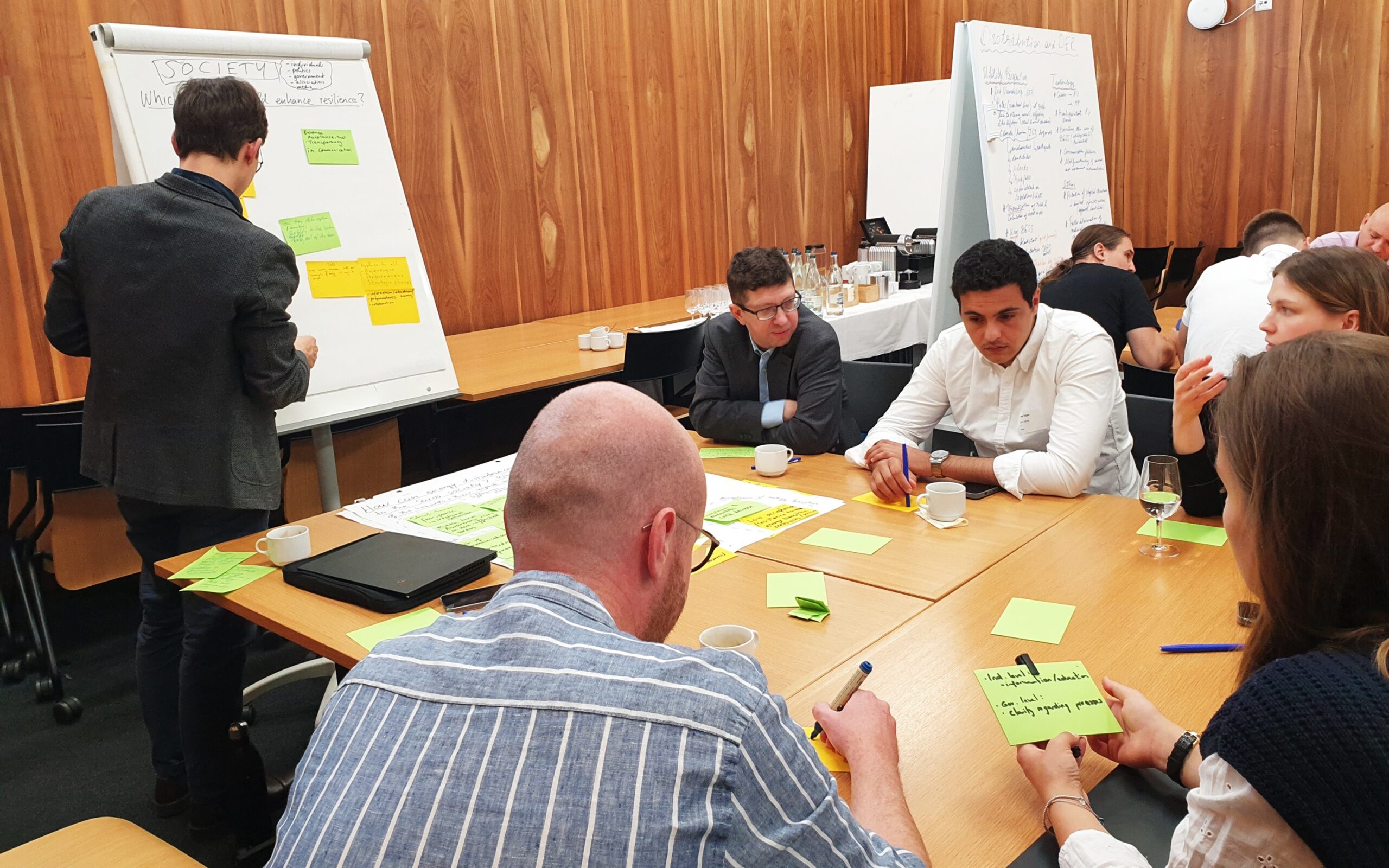
    The RECIPE consortium brought together over 60 Swiss stakeholders at ETH Zürich for its first workshop. The workshop marked an important step toward building participatory research and will contribute to shape RECIPE’s way forward.

    Together, we reflected on the risks and challenges of the energy transition, and explored relevant hazards, vulnerabilities, criticalities, and potential measures from multiple perspectives.

    Read the short workshop summary

  • RECIPE awarded funding from SWEET programme 

    RECIPE awarded funding from SWEET programme 

    A decision has been made on the call for proposals “Critical Infrastructures, Climate Change, and Resilience of the Swiss Energy System”: The RECIPE consortium led by ETH Zurich will receive funding.

    The four participating universities and three private sector partners of the RECIPE (Resilient Infrastructure for the Swiss Energy Transition) consortium will analyse the hazards posed to the Swiss energy infrastructure by the transition of the energy system and climate change, and the associated risks to the economy, society, vital resources, and the ecosystem. For the identified risks and vulnerabilities, the consortium will propose appropriate measures to increase resilience. Finally, RECIPE will provide actionable recommendations to stakeholders based on the project analyses and findings.

    See the full press release